What "smart home" means when it is done properly
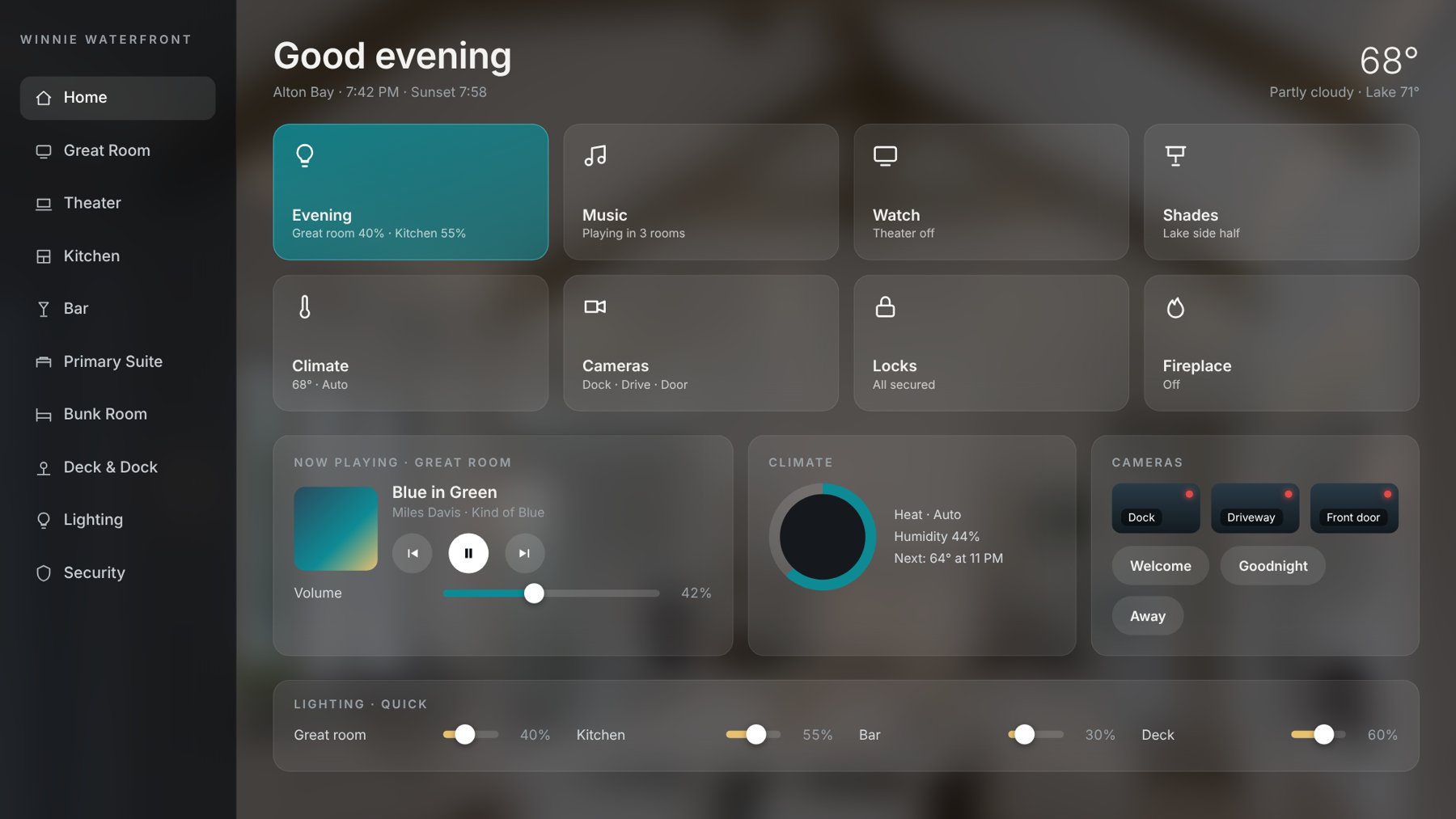
A smart home is not a pile of apps. It is one system that knows the house: which lights make up the "Evening" scene, which speakers are in the great room, what has to happen when someone presses "Movie," and what to do at sunset when nobody is home. We build that system on RTI, a professional control platform used in high-end homes for more than twenty-five years, and we program every button ourselves.
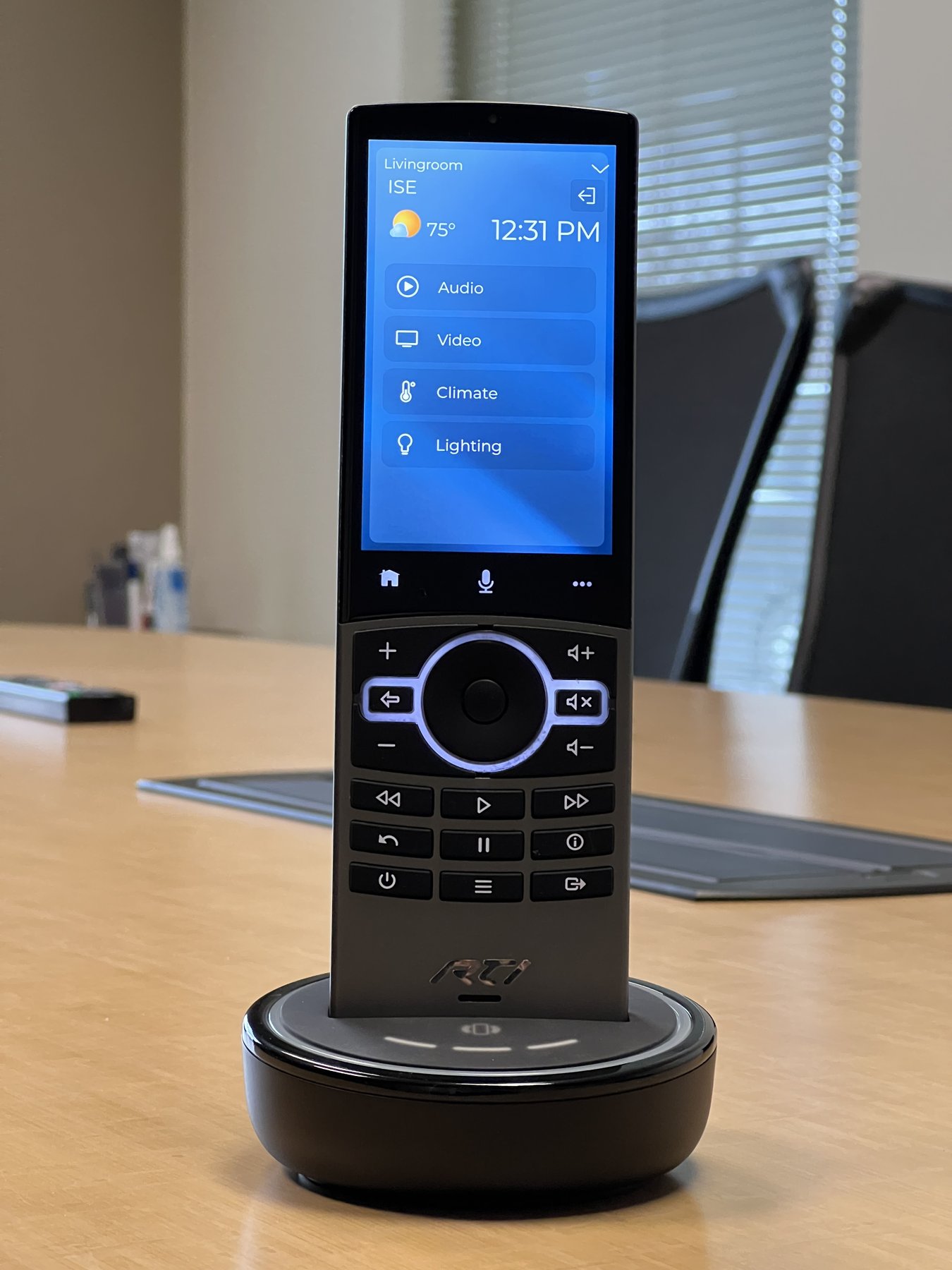
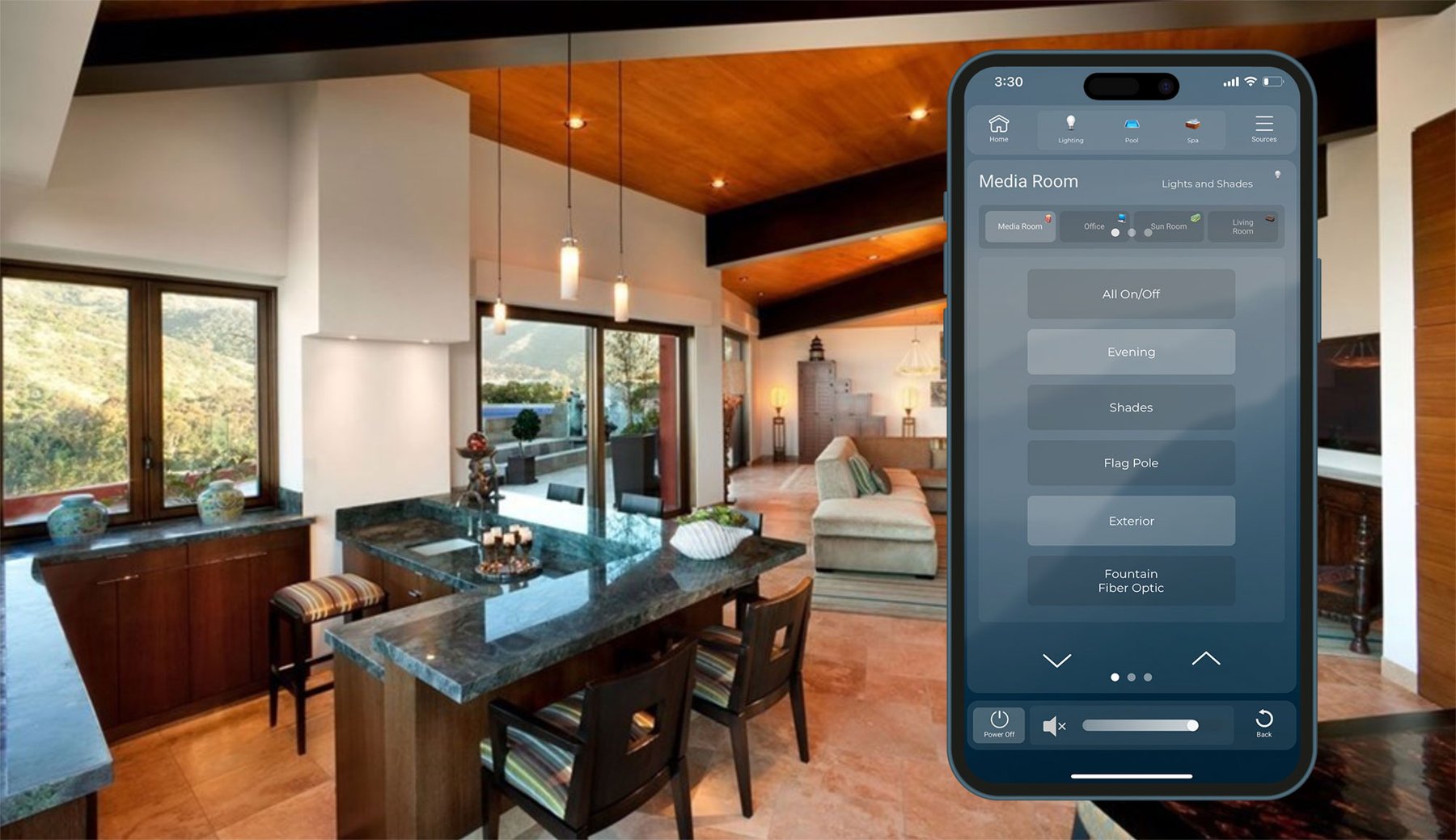
The result is a house that runs from a wall panel, a handheld remote, a tablet on the kitchen counter and the phone in your pocket, all showing the same interface. Guests understand it in thirty seconds. You stop thinking about it after a week.
What we automate
- Lighting. Lutron RadioRA 3 and RA2 scenes, schedules and vacation modes, controlled from engraved keypads and the RTI interface alike.
- Music. Whole-home audio in every room, the deck and the dock, with Sonos, Apple AirPlay and streaming sources.
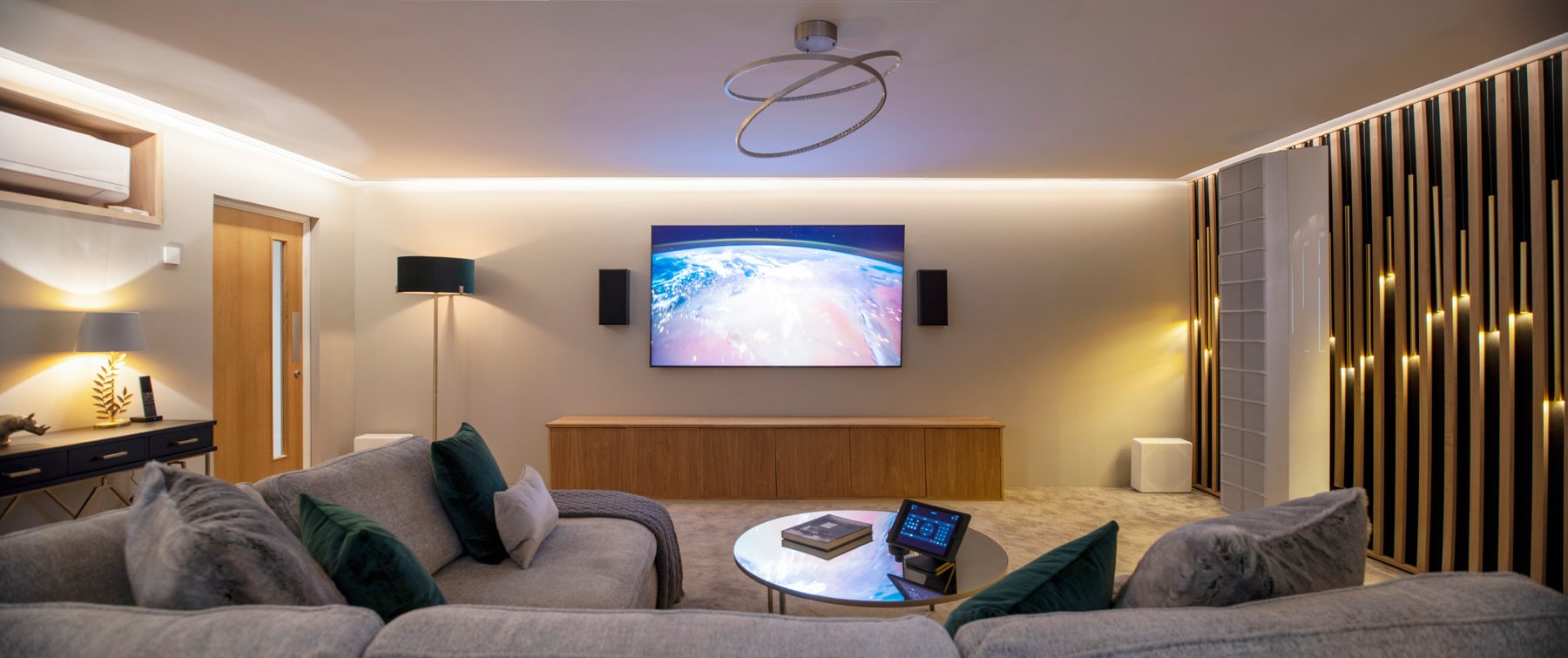
- Video and theater. Home theaters and media rooms where one press handles the display, receiver, lights, shades and source.
- Shades and climate. Lutron shades and thermostats on schedules, with manual override from any panel.
- Cameras, locks and door stations. Luma and DoorBird feeds on the same screen, so you answer the door from the dock.
- The network underneath. Enterprise Wi-Fi and a proper rack, because nothing above this line works without it.
How a project runs
1. Walkthrough. We visit, listen to how you live in the house, and look at what is already there. Existing Lutron, Sonos, Apple TVs and most TVs can usually stay.
2. Design. You get a scope, a fixed price, and for new construction a set of low-voltage drawings your electrician can rough in from.
3. Installation. Rack, wiring, keypads, speakers and panels go in. On new builds we photograph every wall before drywall.
4. Programming and training. We build the interface, test every button, then walk the family through it. Changes in the first month are included; most people ask for two or three.
5. Support. Remote monitoring through OvrC lets us fix most issues from Somerville without a truck roll, and reboot a locked-up device before you notice.
Why RTI instead of a consumer system
Consumer platforms are built for one room and one brand. RTI is built for a whole house with gear from a dozen manufacturers, and it keeps working when the internet goes down, which matters on a lake in February. It also gives us complete control of the interface, so your panels can match the interior rather than a manufacturer's template. See the four design directions on the homepage for what that looks like.
Where we work
Greater Boston, including Somerville, Cambridge, Boston, Brookline, Newton, Wellesley, Weston, Lexington, Winchester, and the Lake Winnipesaukee region of New Hampshire, including Alton, Alton Bay, Wolfeboro, Tuftonboro, Moultonborough, Meredith, Center Harbor, Gilford. Most of our work comes through builders, electricians and designers; homeowners are welcome to call directly.